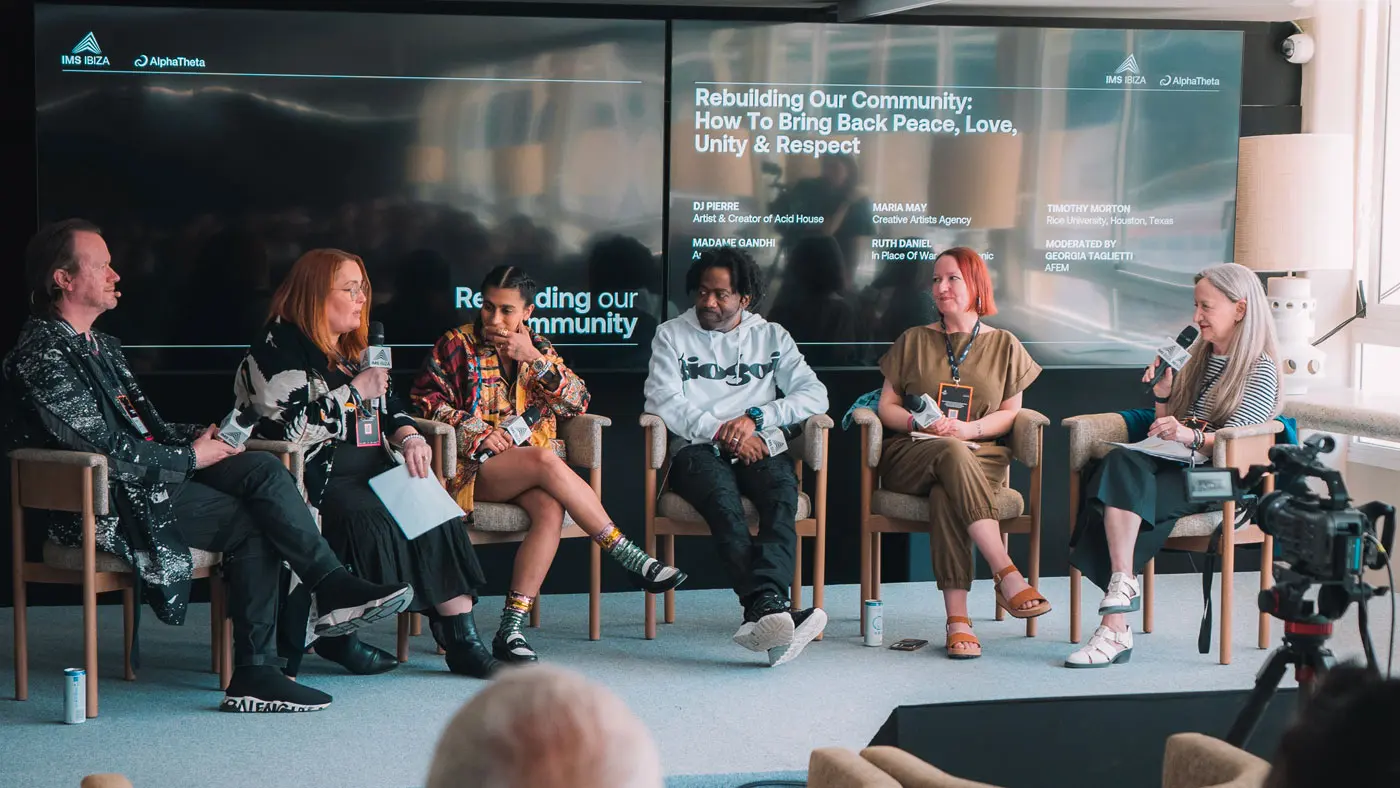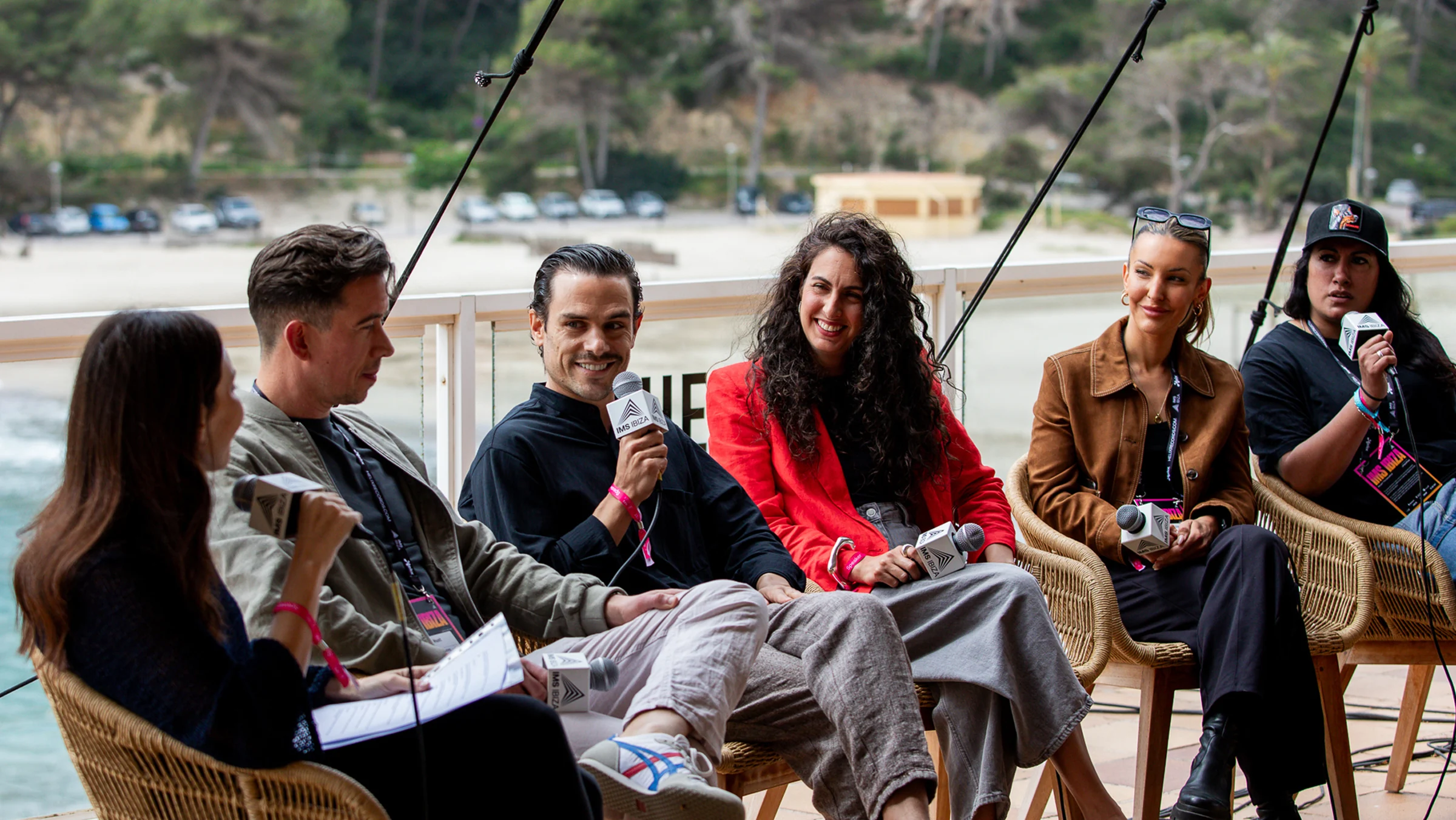
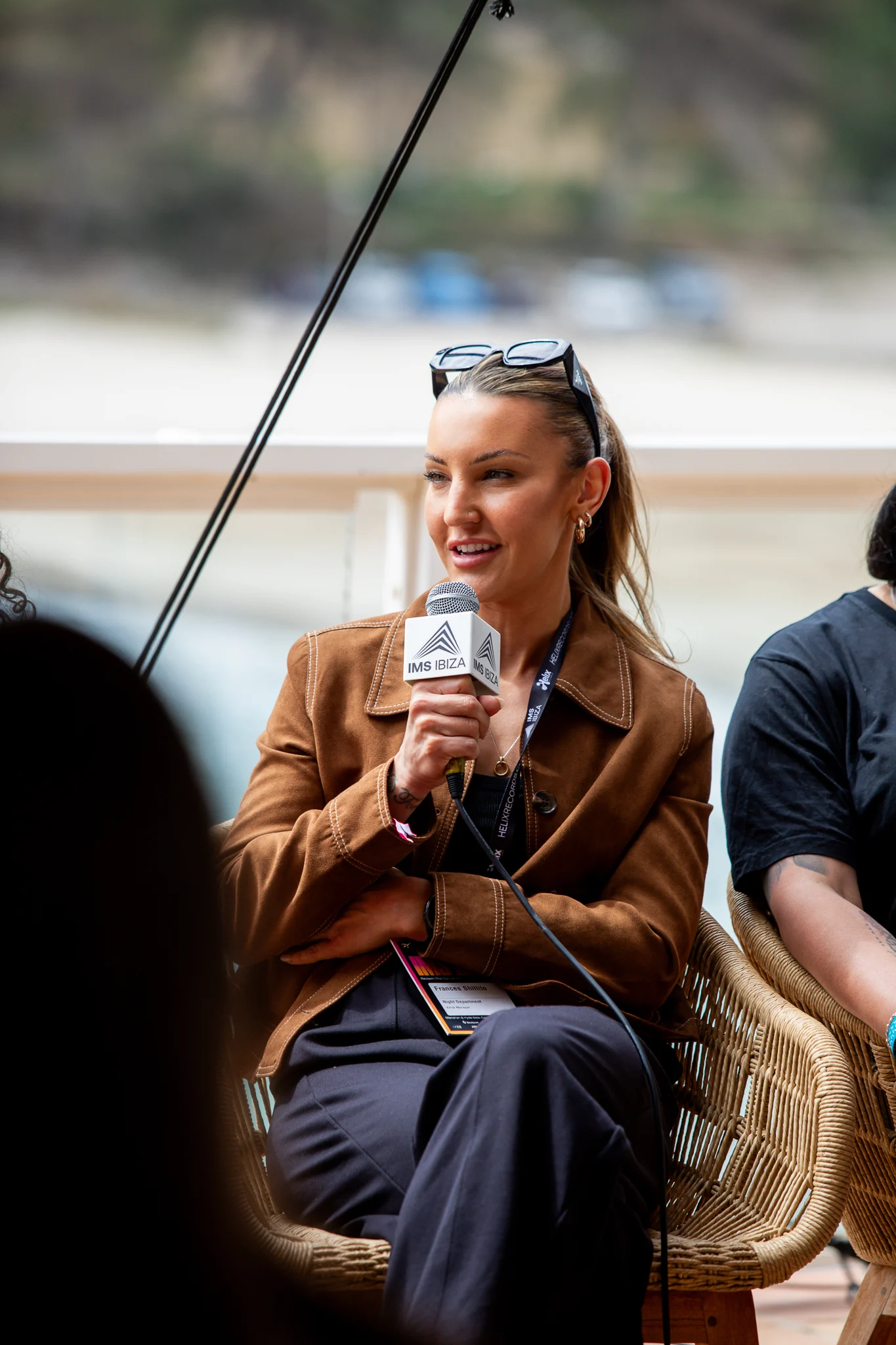
Artist Manager Frances Shillito. Credits : Blanca Galindo & David Simon
The final day of IMS Ibiza 2026 opened in a quieter atmosphere, far removed from the density of the previous sessions. Across The Brave Space, curated by HE.SHE.THEY., the programme turned toward mental health and wellbeing—one of the industry’s most persistent yet least openly addressed issues.
Mental Health and the Culture of Performance
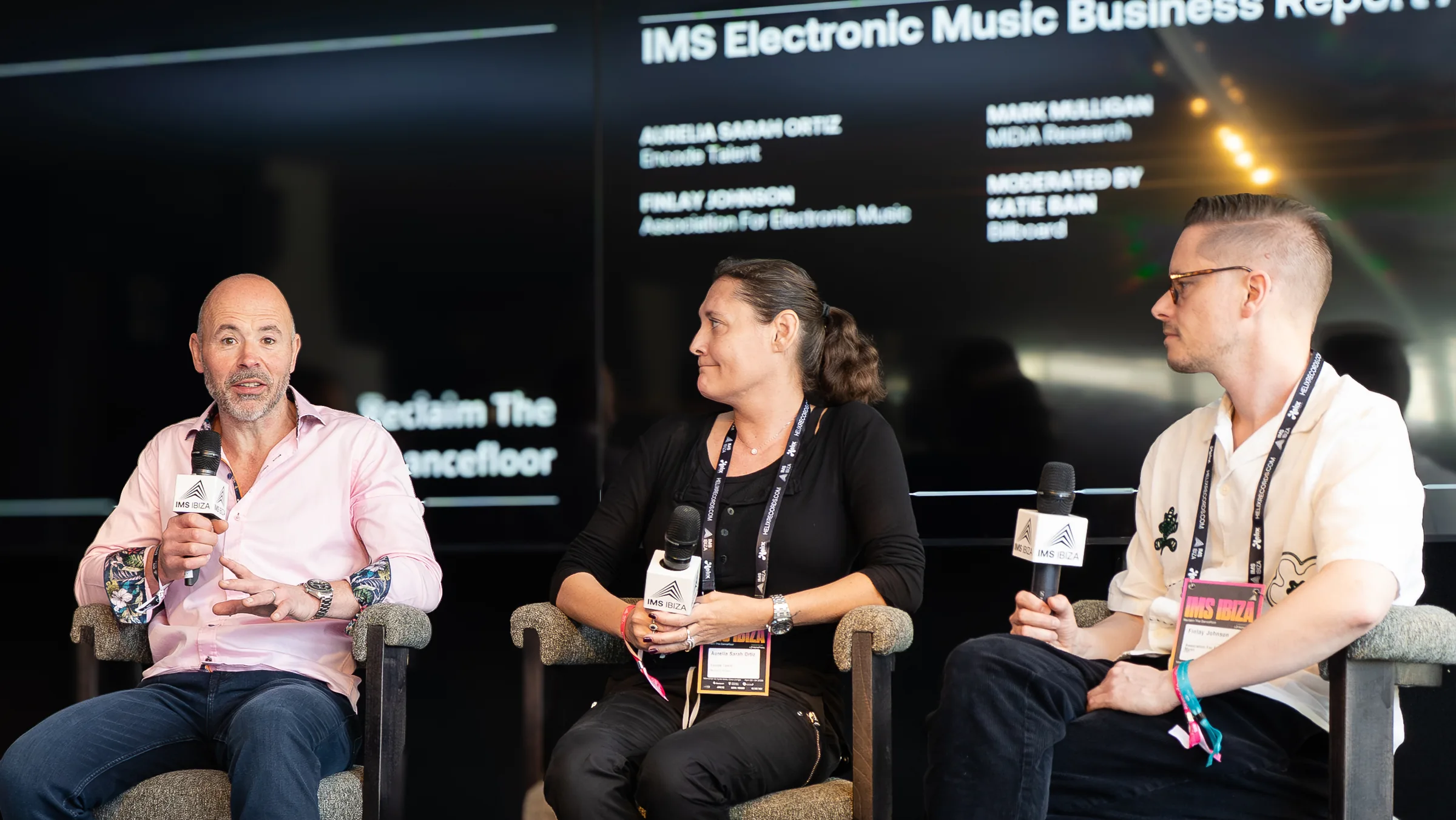
Led by Tristan Hunt (AFEM), the session addressed what he described as the “elephant in the room”: a performance-driven culture where professional value is often tied to constant availability, responsiveness and perceived productivity. In an ecosystem built on visibility and momentum, the fear of falling behind remains a defining pressure. Hunt made a distinction: being reliable does not mean being permanently available. This nuance sparked a broader exchange among speakers, revealing a deeper issue.
Despite its relevance, the session’s placement—on the final day, in a near-empty venue—highlighted a recurring contradiction. While the industry acknowledges mental health as a priority, its programming choices suggest otherwise.
All seats were filled, and the discussion that followed offered grounded, practical insights. Hunt emphasised the importance of boundaries—both with others and with oneself—as a fundamental condition for long-term sustainability. This, he noted, requires self-awareness: understanding one’s limits, recognising internal signals, and allowing space to step back.
He also addressed the need to structure daily routines in a way that allows for disconnection. In a culture where the phone has become an extension of professional identity, he reminded attendees that it remains a tool, not an obligation. Stepping away from it—particularly during moments intended for rest—is essential to maintaining focus and mental clarity.
Performance-driven culture has killed empathy
Another revealing moments of the summit came from the same keynote, during a exchange between panels members. How a simple suggestion about everyone's responsibility to make an effort in their communication became a debate—whether a simple "No" response was respectful or not—revealed a deeper divide.
Amongst people who knows each others & are used to work together, some were arguing that efficiency justifies brevity while for others, it signals disregard, expressed by the straight from the heart :"Just don't be a d*ck !"
In an industry where individuals collaborate continuously, often across years, the inability to consider how communication is received reveals a structural imbalance. Roles and functions take precedence over the individuals behind them, reducing relationships to transactions rather than exchanges. It reflects a broader erosion of empathy, where roles take precedence over individuals, and communication becomes transactional. This is not anecdotal. It is structural.
A performance-driven environment, as Tristan Hunt noted, conditions behaviour. When value is measured by output and responsiveness, emotional intelligence becomes secondary. The result is a culture where burnout is normalized, and basic human interaction becomes negotiable. An industry without empathy is not just ethically fragile—it is economically inefficient. Burnout, legal disputes, reputational damage: these are not abstract risks. They are costs.
Returning to the question of stress, Hunt concluded by stressing the necessity of deliberate pauses. Structuring time into defined blocks, with enforced breaks, becomes less a luxury than a requirement. Yet even here, a gap remained between recognition and application. While mental health was universally acknowledged as a major issue, the willingness to question working habits and communication patterns appeared more limited.
" height="36.18314535452494px" id="H01QrPmHK" width="50.03582884990591px"/></g></svg>)
You need to know yourself in order to be able to draw boundaries. You need to ask yourself :"How do I feel about this?
- Tristan Hunt
ADHD Coach, Music Industry ADHD Coaching (UK)
DJ Mix Culture and the Question of Attribution
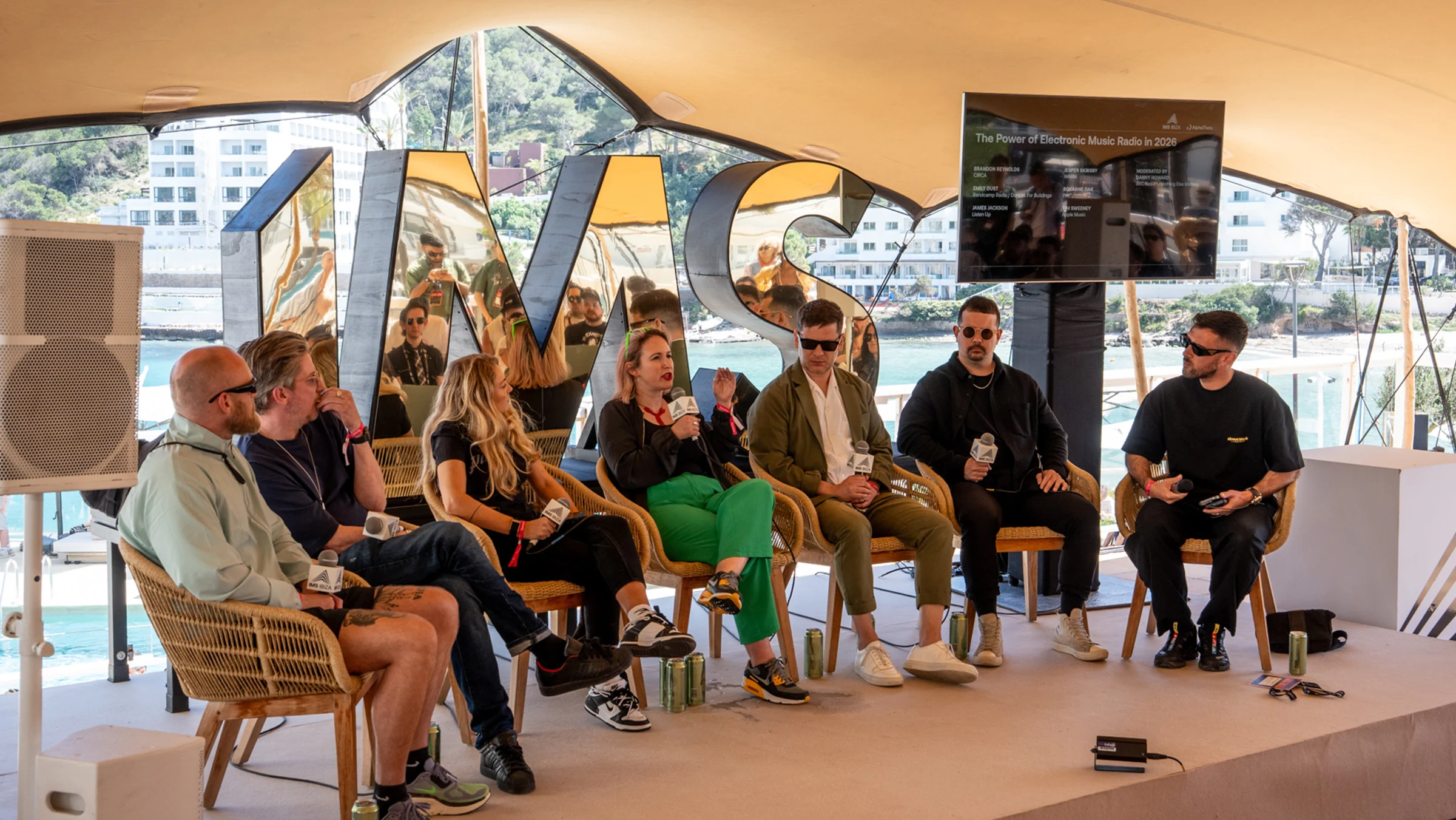
Later in the day, attention shifted to the evolving role of DJ mixes within the broader ecosystem. The panel Apple Music for DJs: DJ Mixes and Culture, moderated by Tim Sweeney and Stephen Campbell, explored the intersection between cultural practice and technological infrastructure.
At its core, the discussion reaffirmed the central role of DJ mixes as tools of storytelling and discovery—formats that extend the life of tracks beyond their original release and shape the identity of scenes.
Apple Music outlined its approach to addressing long-standing industry challenges around rights and compensation. Central to this is the development of a system capable of identifying individual tracks within a mix in real time, ensuring that contributors are properly credited and remunerated. The objective is clear: allow the format to scale globally without eroding its economic foundation.
Beyond technical solutions, the panel returned to a recurring theme across IMS: the importance of human curation. In a landscape increasingly driven by automation, speakers emphasised the value of cultural expertise—knowledge built through proximity, experience and taste.
Partnerships between platforms, artists and promoters were also highlighted as a means of extending the lifecycle of club culture. Through these collaborations, moments that would traditionally remain confined to the dancefloor can reach wider audiences, retaining relevance beyond the physical space in which they were created.
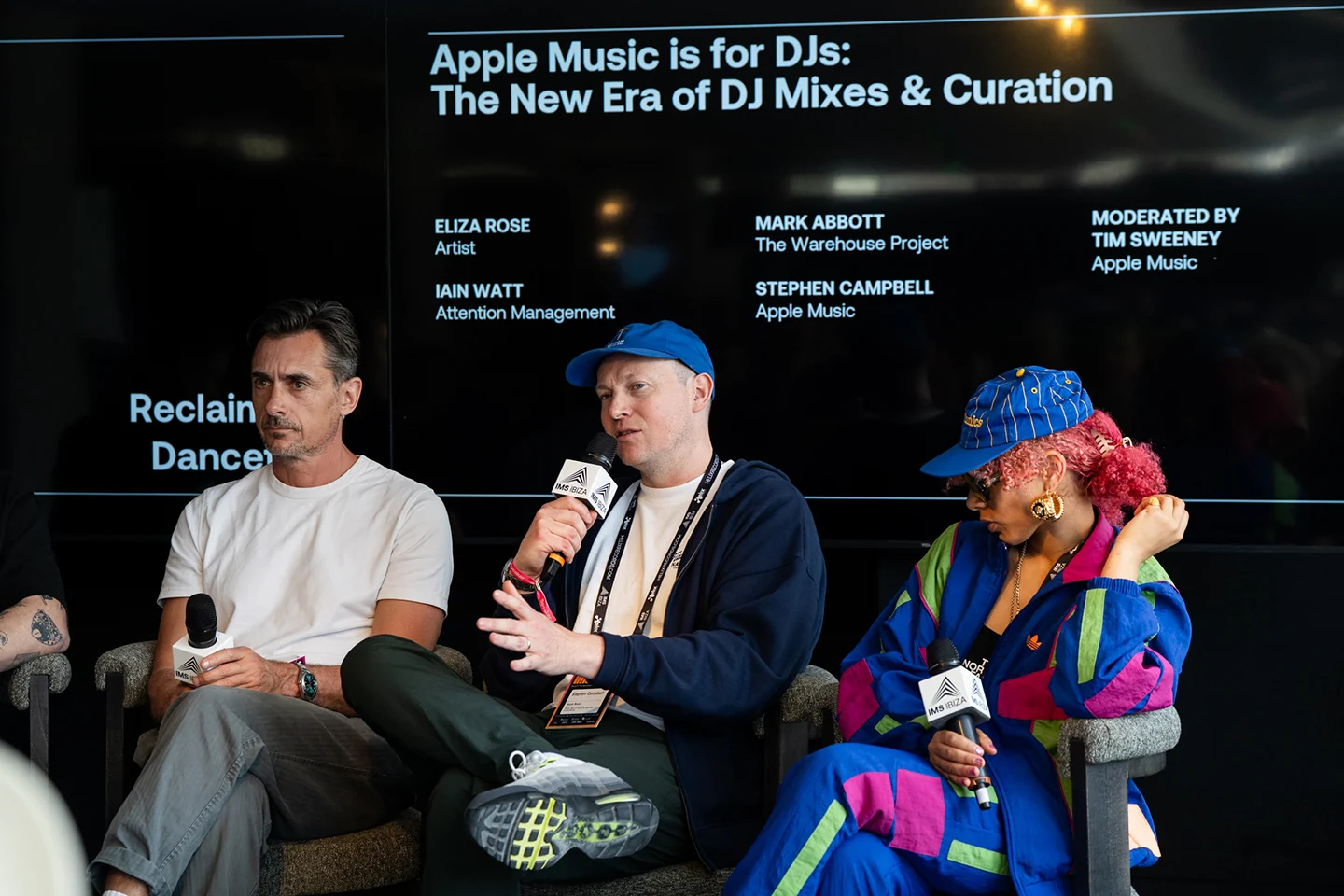
Ian Watt (Attention Management), Stephen Campbell (Apple Music) & DJ Eliza Rose. Credits : Juan Sabatino
" height="36.18314535452494px" id="eWlmNiy7v" width="50.03582884990591px"/></g></svg>)
If you don't ask. You don't get.
- Jen Hammel
Agent, CAA (UK)
Women, Visibility and Structural Imbalance
The day’s most revealing moment came during the panel No Job for a Lady: Celebrating Women in Electronic Music. Once again hosted within The Brave Space, the session presented a stark visual reality: a full room of forty attendees, of whom only five were men.
Rachel Strassberger addressed this imbalance directly, acknowledging both the progress made and the limits of that progress. Her concern was clear: visibility without collective engagement risks becoming symbolic rather than transformative.
The discussion moved toward structural barriers. Jen Hammel shared a personal example, recalling that she had been overlooked for promotion simply because she had not asked. A pattern quickly recognised by others on the panel. Women, they noted, are often conditioned to wait for recognition rather than demand it.
This led to a broader reflection on imposter syndrome—a psychological bias shared by many of the speakers, despite their established success. The contradiction is striking: highly accomplished professionals still questioning their legitimacy within the very systems they help shape.
Beyond individual experiences, the panel exposed a deeper issue. While the industry increasingly highlights female talent, it continues to frame their presence as a category rather than a norm.
This raises a more fundamental question. At what point does creating dedicated spaces—panels, stages, awards—become counterproductive? When recognition is contextualised by gender, it risks reinforcing the very distinctions it seeks to dissolve.
The parallel with other parts of the industry is evident. As artists like Black Coffee have argued in a recent crossed interview with David Guetta for DJ Mag— The DJ & producer explained not wanted to be awarded anymore as best "African" artist but as overall one— true integration occurs when work is evaluated without qualifiers—when it exists within the same framework as everything else.
Yet the data suggests that this point has not been reached. Women remain underrepresented on major stages, despite their presence across audiences and professional roles. More concerning still, studies indicate that a significant majority have experienced some form of harassment or assault within the industry.
The imbalance, therefore, is not theoretical. It is structural.
" height="36.18314535452494px" id="RvcEJZzRz" width="50.03582884990591px"/></g></svg>)
I hope that the scene will evolve that positions aren't made for women. I hope that the new generations will not have our biases.
- Rachel Strassberger
Director, Realsound SA (CH)
A Collective Responsibility
What the final day of IMS Ibiza revealed is not a lack of awareness, but a gap between discourse and engagement.
Mental health is discussed, but often marginalized. Gender equality is acknowledged, but still treated as a specialized topic rather than a universal concern. Tools and frameworks exist—through organisations such as AFEM or initiatives linked to MeToo—but their adoption remains inconsistent.
The most telling observation lies in participation. The absence of a broader audience at these discussions, particularly among those most structurally represented within the industry, reflects a deeper disengagement.
Conclusion: Beyond Acknowledgement
IMS Ibiza 2026 closes on a paradox.
On one hand, the summit continues to surface the industry’s most urgent issues with clarity and depth. On the other, the response from the wider ecosystem remains uneven. The conversations are happening—but not always with those who hold the greatest capacity to act.
The final day, more than any other, shifts the focus away from systems and toward individuals. Not as abstract participants in a global industry, but as active contributors to its culture.
The question is no longer whether the problems are known. They are. The gap is no longer one of knowledge. It is one of responsibility.
The question is whether the industry is willing to move beyond acknowledgement—toward accountability, participation and structural change.
Because without that shift, even the most relevant conversations risk remaining exactly that: conversations.
As long as these subjects continue to be treated as specialised topics—assigned to dedicated spaces rather than integrated into the core of the industry’s functioning—they will remain peripheral. Not because they lack importance, but because they lack ownership.
IMS remains one of the best platform ever. The question is whether the industry is willing to meet it halfway.
IMS Ibiza 2026, Tristan Hunt, Apple Music, Rachel Strassberger,