IMS Ibiza 2026 Day 1: Growth, Culture and Contradictions
0%
IMS Ibiza 2026 Day 1: Growth, Culture and Contradictions
0%

IMS Ibiza 2026 Day 1: Growth, Culture and Contradictions

·
0 min. read
0 min. read

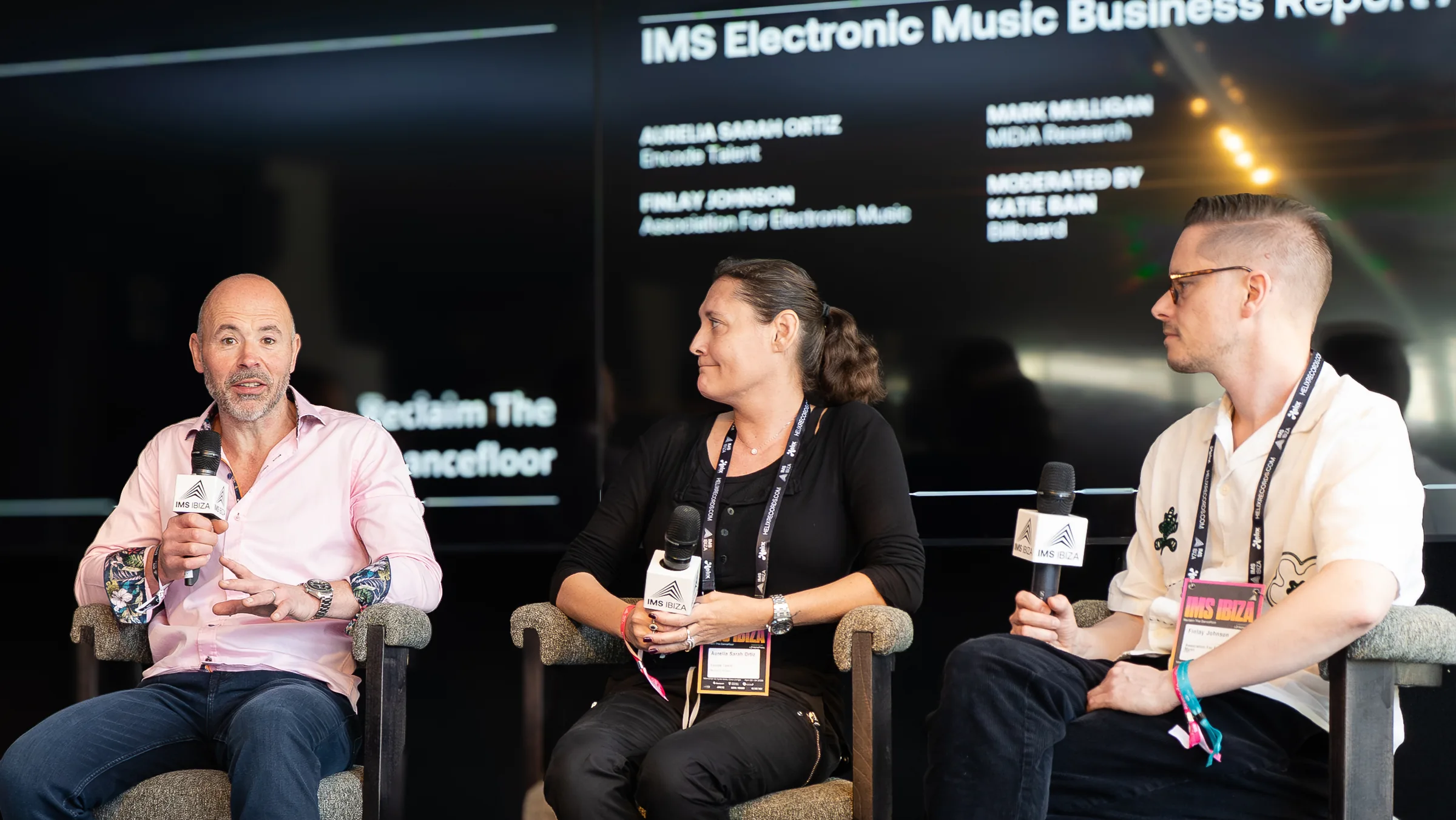
Mark Mulligan (MIDiA Research), Aurelia Sarah Ortiz (Encode Talent) & Finlay Johnson (AFEM). Credits: Alex Voss

Mark Mulligan (MIDiA Research), Aurelia Sarah Ortiz (Encode Talent) & Finlay Johnson (AFEM)

Mark Mulligan (MIDiA Research), Aurelia Sarah Ortiz (Encode Talent) & Finlay Johnson (AFEM). Credits: Alex Voss

IMS Ibiza 2026 Day 1: Growth, Culture and Contradictions

Day 1 at IMS Ibiza 2026 revealed key trends in electronic music, from Afro House growth to safety and accountability debates.

0 min. read

By Alex Voss

Alex Voss

Archived Content

This article is part of BPM Magazine’s archives, preserved to document the evolution of electronic music culture. It may reflect the context, trends, and information available at the time of publication.

Day 1 at IMS Ibiza 2026 revealed key trends in electronic music, from Afro House growth to safety and accountability debates.

While the world navigates prolonged uncertainty shaped by recent conflicts, the electronic music industry maintains certain landmarks. IMS Ibiza remains among them—an international conference gathering global industry figures for three days to address current challenges and future directions.

The opening day exemplified IMS's defining characteristic: versatility. Within hours, the program moved from data-driven industry analysis to cultural preservation, from celebrating Nervous Records' longevity to examining abuse within club environments, concluding with a rare public appearance by Yann Pissenem.

IMS Ibiza 2026 Report : Growth, Shifts and Structural Warnings

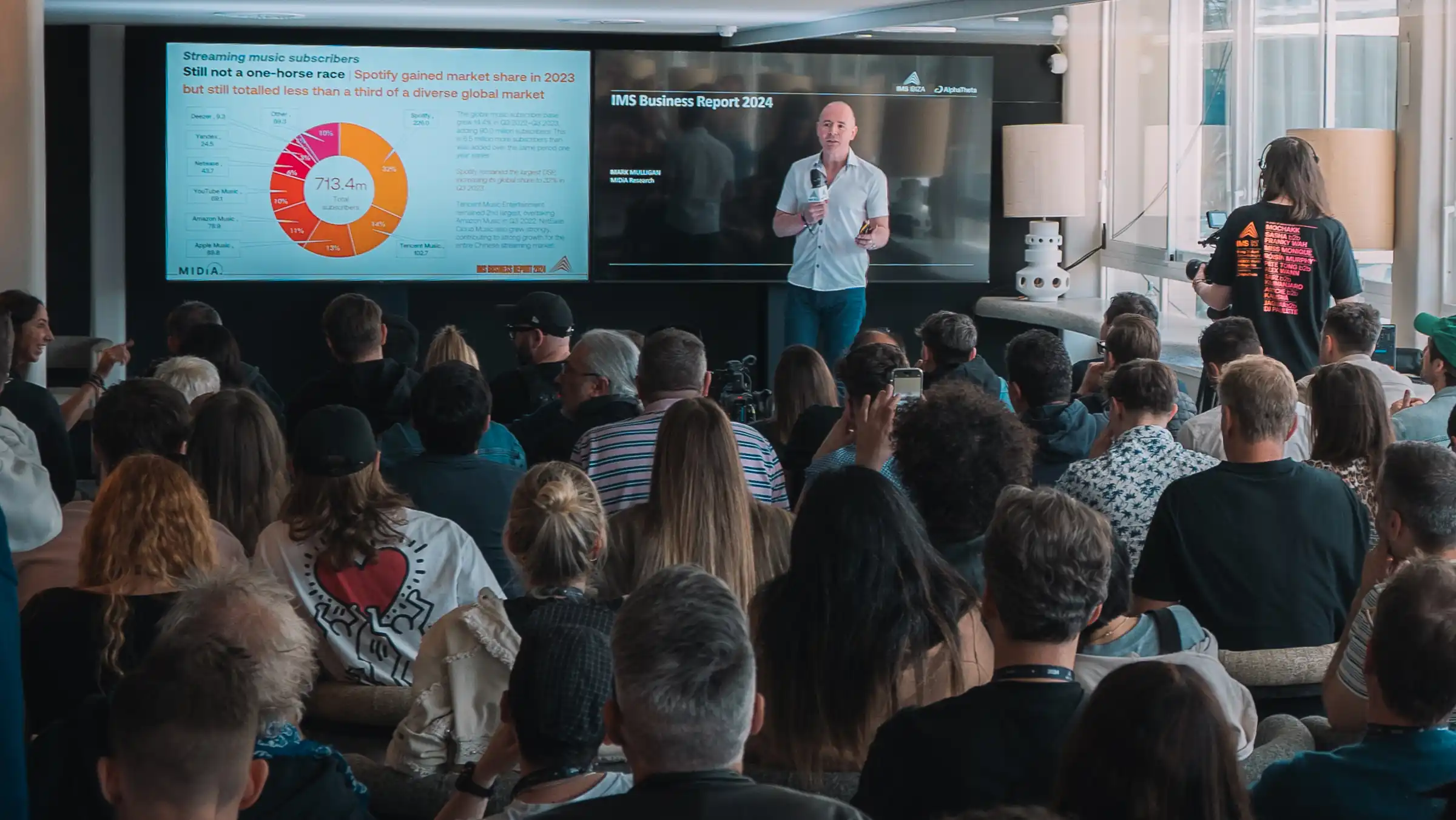
Mark Mulligan and MiDIA Research presented the annual report, offering quantitative confirmation of observable trends. Afro-House now stands as the second most-streamed genre after Tech House, its growth no longer anecdotal but measurable and meteoric. Electronic music's geographic expansion continues, with the Global South emerging as distinct markets where Latin music popularizing the genre across Hispanic territories, India developing its own characteristics. These regions, previously underrepresented in industry analysis, now warrant dedicated examination.

Investment funds continue acquiring label catalogues, a trend Mulligan attributes to electronic music's intrinsic culture of remixing and reinvention. By securing catalogues, funds acquire not just content but culture assets capable of perpetual renewal and long-term revenue generation.

Visibility does not equal viability

TikTok's influence, despite impressive engagement metrics, shows minimal conversion: fewer than one-fifth of users become customers. Mulligan cautioned: "We need to ask ourselves how to create value with electronic music so that it doesn't become just another piece of content for platforms."

Day 1 at IMS Ibiza 2026 revealed key trends in electronic music, from Afro House growth to safety and accountability debates.

While the world navigates prolonged uncertainty shaped by recent conflicts, the electronic music industry maintains certain landmarks. IMS Ibiza remains among them—an international conference gathering global industry figures for three days to address current challenges and future directions.

The opening day exemplified IMS's defining characteristic: versatility. Within hours, the program moved from data-driven industry analysis to cultural preservation, from celebrating Nervous Records' longevity to examining abuse within club environments, concluding with a rare public appearance by Yann Pissenem.

IMS Ibiza 2026 Report : Growth, Shifts and Structural Warnings

Mark Mulligan and MiDIA Research presented the annual report, offering quantitative confirmation of observable trends. Afro-House now stands as the second most-streamed genre after Tech House, its growth no longer anecdotal but measurable and meteoric. Electronic music's geographic expansion continues, with the Global South emerging as distinct markets where Latin music popularizing the genre across Hispanic territories, India developing its own characteristics. These regions, previously underrepresented in industry analysis, now warrant dedicated examination.

Investment funds continue acquiring label catalogues, a trend Mulligan attributes to electronic music's intrinsic culture of remixing and reinvention. By securing catalogues, funds acquire not just content but culture assets capable of perpetual renewal and long-term revenue generation.

Visibility does not equal viability

TikTok's influence, despite impressive engagement metrics, shows minimal conversion: fewer than one-fifth of users become customers. Mulligan cautioned: "We need to ask ourselves how to create value with electronic music so that it doesn't become just another piece of content for platforms."

We need to ask ourselves how to create value with electronic music so that it doesn’t become just another piece of content for platforms.

- Mark Mulligan

MiDIA Research, Founder

Ibiza: Pricing, Perception and Reality

On a local level, Ibiza’s evolving model was addressed with unusual transparency. 2025 saw fewer events but higher ticket prices. The increase concentrated primarily in VIP areas, a strategy Pissenem would later confirm allowed the majority of tickets to remain accessible. As Mulligan noted, this didn't diminish quality or experience but it redistributed cost structures.

His example was precise: premium pricing at the top enabled venues to maintain tickets around €60, while comparable entry points in the United States often reach $100–150.

The strategy is clear: segment the experience without losing the crowd.

The model reflects a wider recalibration of the island’s positioning: premiumisation at the top end, balanced by controlled entry points for the wider audience. Whether this equilibrium can be sustained remains an open question.

We need to ask ourselves how to create value with electronic music so that it doesn’t become just another piece of content for platforms.

- Mark Mulligan

MiDIA Research, Founder

Ibiza: Pricing, Perception and Reality

On a local level, Ibiza’s evolving model was addressed with unusual transparency. 2025 saw fewer events but higher ticket prices. The increase concentrated primarily in VIP areas, a strategy Pissenem would later confirm allowed the majority of tickets to remain accessible. As Mulligan noted, this didn't diminish quality or experience but it redistributed cost structures.

His example was precise: premium pricing at the top enabled venues to maintain tickets around €60, while comparable entry points in the United States often reach $100–150.

The strategy is clear: segment the experience without losing the crowd.

The model reflects a wider recalibration of the island’s positioning: premiumisation at the top end, balanced by controlled entry points for the wider audience. Whether this equilibrium can be sustained remains an open question.

Before it was an industry, it was a movement. Movements don't run on revenue. They run on belief.

- Steven Braines

HE.SHE.THEY, Co-Founder

Reclaim the Dancefloor: A Culture Under Pressure

The keynote introducing this year's central theme featured Steven Braines (HE.SHE.THEY), who traced dancefloor culture to its origins in Chicago, New York and Detroit ; spaces created by marginalized communities seeking refuge from discrimination. The dancefloor functioned as equalizer and sanctuary, where identity markers dissolved into collective movement.

Decades later, Braines identified a troubling reversal: exclusion now operates from within rather than without. His reminder carried weight: "Before it was an industry, it was a movement. Movements don't run on revenue. They run on belief." He continued: "If the dance floor isn't safe, it isn't free. If it isn't free, it isn't sacred. It's just another room."

This framework led directly to the workshop on industry responsibility regarding abuse, consent and accountability added to the program this year, positioned as urgent rather than supplementary.

The Industry's : Safety, Consent & Accountability : The Silence Around Action

A workshop dedicated to these issues covering consent, accountability and safeguarding should have been central to the day's agenda. Instead, it drew approximately one-third of the available audience at its start, diminishing to roughly one-fifth by conclusion.

As Finlay Johnson from AFEM began addressing recent events that prompted AFEM's statement, the room, still not empty remained notably vocal. Two men conversed audibly meters from the stage to the point that someone from the team had to asked them to leave. The irony was involuntary, but complete.

The Tools Exist, the Action doesn’t.

Nowhere was this contradiction more visible than in this workshop dedicated to abuse, consent and accountability. Publicly, the industry expresses solidarity with victims. Structurally, implementation remains inconsistent.

Pia Micallef from MeToo articulated what the sparse attendance suggested: while electronic music long embodied freedom and the dancefloor functioned as sacred space, that promise has fractured under persistent, largely unpunished cultures of harassment and assault.

The workshop revealed a harsher reality. Activists and organizations have provided tools for years. : Initiatives such as MeTooMusic offers comprehensive resources : educational materials, administrative frameworks, legal guidance, staff training in de-escalation and awareness : The industry does not lack tools. It lacks implementation.

Therefore the question is no longer what needs to be done? But Why it is not being done?

Sam Spencer identified the impasse: if leadership doesn't act, systemic change remains implausible. The question is no longer what requires doing, but why so few are doing it. Widespread condemnation coexists with selective engagement—a gap between stated values and operational priorities.

People should try to party and disconnect from the world.

- Yann Pissenem

The Night League, founder

The Night League, founder

Yann Pissenem: Vision, Scale and Limits

The day concluded with an extended conversation between Pete Tong and Yann Pissenem, whose public appearances remain rare enough that Tong emphasized the difficulty of securing his agreement. The conference room filled beyond capacity, attention absolute.

Pissenem opened by deflecting: his brother, not himself, should occupy the spotlight. Twenty-five years ago, his brother envisioned electronic music's globalization and understood it required transformation into spectacle. Throughout the conversation, Pissenem consistently redirected recognition toward collaborators & production teams, marketing divisions, booking agents including Charlie and Lizzie Tatman, Jodie Layton.

When Tong pressed on budgets or competition for top-tier artist residencies, Pissenem avoided specifics, instead highlighting team achievements. He recounted convincing Will Smith to participate in [UNVRS]'s launch campaign (the UFO video that achieved viral circulation and Webby Award nomination, crediting Sam Sparrow's work.)

The conversation addressed local pressures. On sustainability initiatives desired by island government: Pissenem explained he operates within business parameters, his efforts constrained by commercial realities rather than unilateral capacity. On Ibiza's housing crisis and accommodation scarcity: discussions with officials continue, but systemic change exceeds his operational reach.

One revelation emerged: Brooklyn Mirage's owners had approached him. Pissenem declined, citing [UNVRS]'s recent launch and current resource allocation, though he left future involvement open.

The interview's final segment turned personal. Pissenem discussed martial arts and specifically jiu-jitsu, where he holds world vice-champion status, as necessary discipline for maintaining physical and mental equilibrium. A wry admission followed: his team encourages regular training, having observed marked differences in his manageability post-exercise.

Asked for cherished memories, he named two: Erick Morillo in 2011 playing "Gadjo - So Many Times" on Space Ibiza's terrace, and more recently, the birth of his two daughters. A rare opening after nearly fifty minutes of measured responses.

He concluded with observations on contemporary club culture: diminished dancing, increased phone presence. He admitted lacking WhatsApp entirely, viewing constant connectivity as antithetical to authentic experience. His closing request is that people attempt disconnection to rediscover a party's true essence carried particular resonance.

Conlusion : A Revealing Paradox

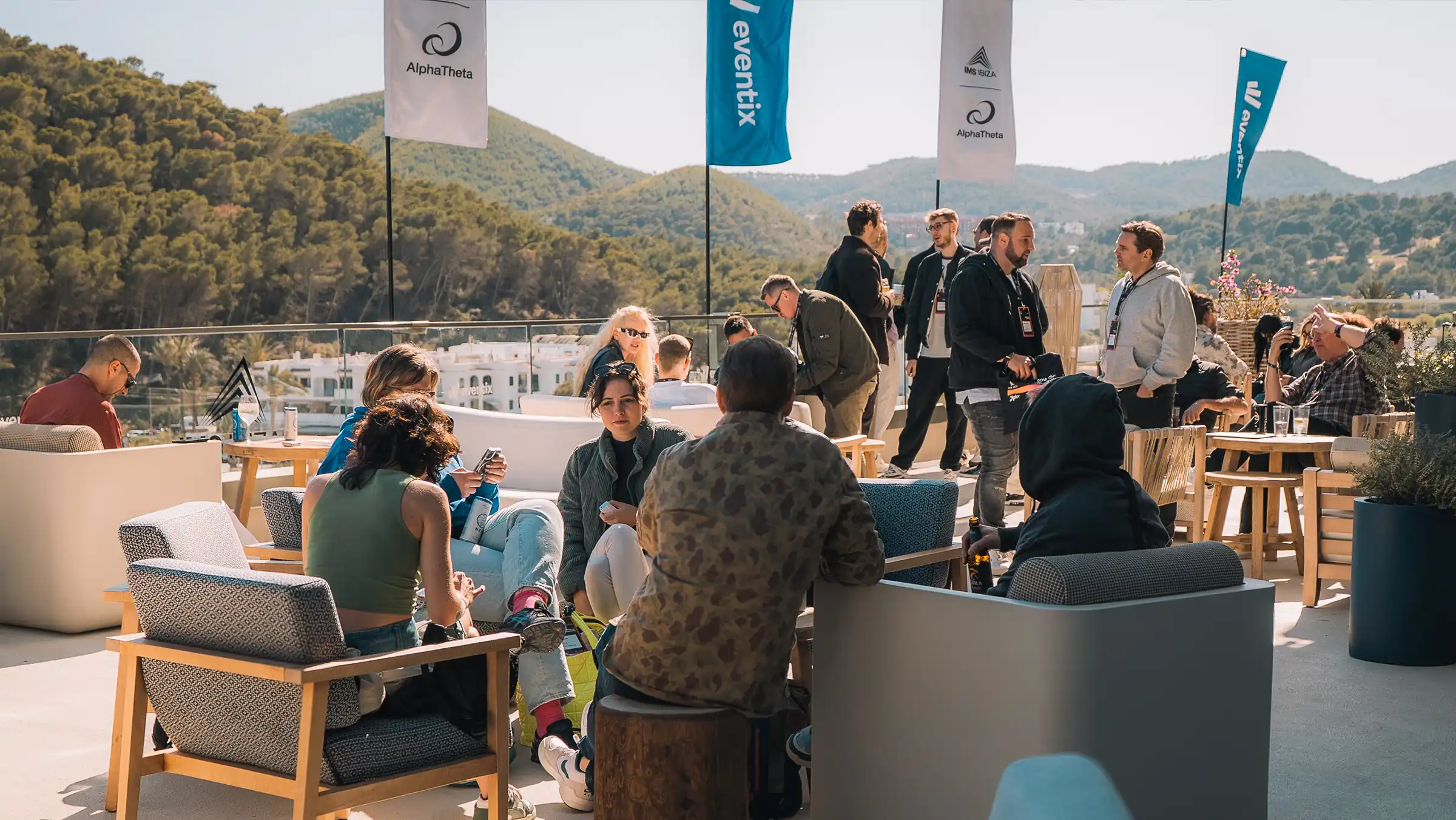
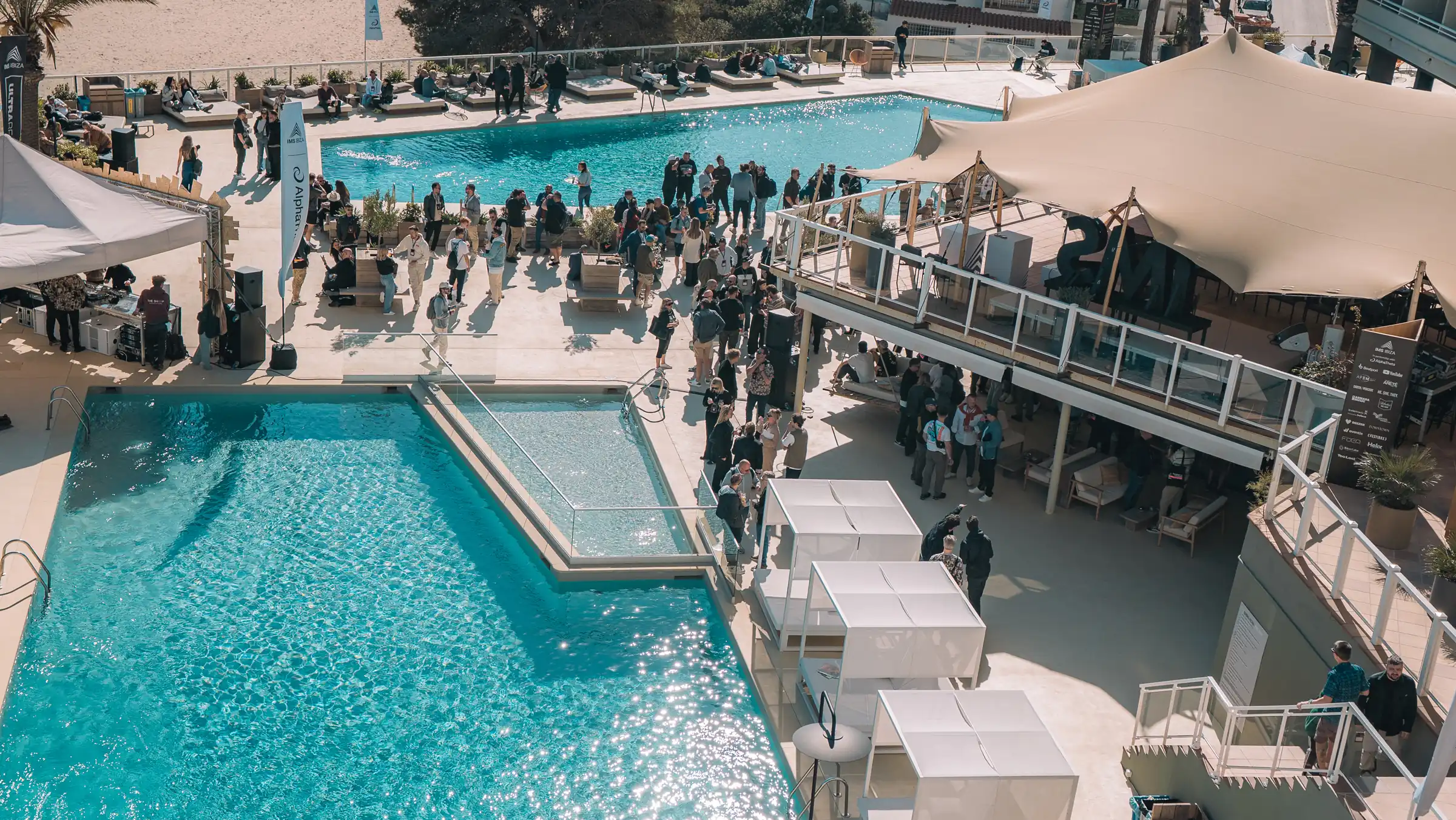
As the day came to a close, the contrast was impossible to ignore. Inside the conference rooms: discussions about safety, responsibility, cultural erosion. Outside, around the pools of Mondrian Ibiza and Hyde Ibiza: delegates filming, networking, performing presence.

This isn't a contradiction IMS is not attempting to resolve but it's the one it embodies.

On one side, IMS Ibiza continues to provide a platform for rigorous analysis, a precious space for speakers, cultural reflection and forward-looking dialogue. Simultaneously, the existing gap that — unwittingly revealed— between words and actions remains visible, not to a distant public, but among the professionals in the sector themselves. Those who are present to discuss the industry's challenges are often the same individuals reproducing its dynamics in real time.

Around the poolside of the Mondrian Ibiza and Hyde Ibiza, the atmosphere reflects another dimension of the summit: networking, visibility, leisure. Conversations coexist with content creation, reflection with distraction.

This coexistence is not incidental. It is the reality IMS embodies—a space where the industry analyses itself while simultaneously reproducing its own dynamics. Where the most urgent conversations coexist with distraction. Where awareness is high, but engagement remains selective.

Day one did not lack clarity. It lacked alignment.

And perhaps that is the most accurate reflection of the electronic music industry today. In that sense, the paradox is not a flaw. It is a mirror.
TAGS :

IBIZA SS26

IBIZA SS26

Events

Behind The Scenes

IMS Ibiza 2026, IMS Ibiza 2026 Report, MeTooMusic, Yann Pissenem,

Before it was an industry, it was a movement. Movements don't run on revenue. They run on belief.

- Steven Braines

HE.SHE.THEY, Co-Founder

Reclaim the Dancefloor: A Culture Under Pressure

The keynote introducing this year's central theme featured Steven Braines (HE.SHE.THEY), who traced dancefloor culture to its origins in Chicago, New York and Detroit ; spaces created by marginalized communities seeking refuge from discrimination. The dancefloor functioned as equalizer and sanctuary, where identity markers dissolved into collective movement.

Decades later, Braines identified a troubling reversal: exclusion now operates from within rather than without. His reminder carried weight: "Before it was an industry, it was a movement. Movements don't run on revenue. They run on belief." He continued: "If the dance floor isn't safe, it isn't free. If it isn't free, it isn't sacred. It's just another room."

This framework led directly to the workshop on industry responsibility regarding abuse, consent and accountability added to the program this year, positioned as urgent rather than supplementary.

The Industry's : Safety, Consent & Accountability : The Silence Around Action

A workshop dedicated to these issues covering consent, accountability and safeguarding should have been central to the day's agenda. Instead, it drew approximately one-third of the available audience at its start, diminishing to roughly one-fifth by conclusion.

As Finlay Johnson from AFEM began addressing recent events that prompted AFEM's statement, the room, still not empty remained notably vocal. Two men conversed audibly meters from the stage to the point that someone from the team had to asked them to leave. The irony was involuntary, but complete.

The Tools Exist, the Action doesn’t.

Nowhere was this contradiction more visible than in this workshop dedicated to abuse, consent and accountability. Publicly, the industry expresses solidarity with victims. Structurally, implementation remains inconsistent.

Pia Micallef from MeToo articulated what the sparse attendance suggested: while electronic music long embodied freedom and the dancefloor functioned as sacred space, that promise has fractured under persistent, largely unpunished cultures of harassment and assault.

The workshop revealed a harsher reality. Activists and organizations have provided tools for years. : Initiatives such as MeTooMusic offers comprehensive resources : educational materials, administrative frameworks, legal guidance, staff training in de-escalation and awareness : The industry does not lack tools. It lacks implementation.

Therefore the question is no longer what needs to be done? But Why it is not being done?

Sam Spencer identified the impasse: if leadership doesn't act, systemic change remains implausible. The question is no longer what requires doing, but why so few are doing it. Widespread condemnation coexists with selective engagement—a gap between stated values and operational priorities.

People should try to party and disconnect from the world.

- Yann Pissenem

The Night League, founder

Yann Pissenem: Vision, Scale and Limits

The day concluded with an extended conversation between Pete Tong and Yann Pissenem, whose public appearances remain rare enough that Tong emphasized the difficulty of securing his agreement. The conference room filled beyond capacity, attention absolute.

Pissenem opened by deflecting: his brother, not himself, should occupy the spotlight. Twenty-five years ago, his brother envisioned electronic music's globalization and understood it required transformation into spectacle. Throughout the conversation, Pissenem consistently redirected recognition toward collaborators & production teams, marketing divisions, booking agents including Charlie and Lizzie Tatman, Jodie Layton.

When Tong pressed on budgets or competition for top-tier artist residencies, Pissenem avoided specifics, instead highlighting team achievements. He recounted convincing Will Smith to participate in [UNVRS]'s launch campaign (the UFO video that achieved viral circulation and Webby Award nomination, crediting Sam Sparrow's work.)

The conversation addressed local pressures. On sustainability initiatives desired by island government: Pissenem explained he operates within business parameters, his efforts constrained by commercial realities rather than unilateral capacity. On Ibiza's housing crisis and accommodation scarcity: discussions with officials continue, but systemic change exceeds his operational reach.

One revelation emerged: Brooklyn Mirage's owners had approached him. Pissenem declined, citing [UNVRS]'s recent launch and current resource allocation, though he left future involvement open.

The interview's final segment turned personal. Pissenem discussed martial arts and specifically jiu-jitsu, where he holds world vice-champion status, as necessary discipline for maintaining physical and mental equilibrium. A wry admission followed: his team encourages regular training, having observed marked differences in his manageability post-exercise.

Asked for cherished memories, he named two: Erick Morillo in 2011 playing "Gadjo - So Many Times" on Space Ibiza's terrace, and more recently, the birth of his two daughters. A rare opening after nearly fifty minutes of measured responses.

He concluded with observations on contemporary club culture: diminished dancing, increased phone presence. He admitted lacking WhatsApp entirely, viewing constant connectivity as antithetical to authentic experience. His closing request is that people attempt disconnection to rediscover a party's true essence carried particular resonance.

Conlusion : A Revealing Paradox

As the day came to a close, the contrast was impossible to ignore. Inside the conference rooms: discussions about safety, responsibility, cultural erosion. Outside, around the pools of Mondrian Ibiza and Hyde Ibiza: delegates filming, networking, performing presence.

This isn't a contradiction IMS is not attempting to resolve but it's the one it embodies.

On one side, IMS Ibiza continues to provide a platform for rigorous analysis, a precious space for speakers, cultural reflection and forward-looking dialogue. Simultaneously, the existing gap that — unwittingly revealed— between words and actions remains visible, not to a distant public, but among the professionals in the sector themselves. Those who are present to discuss the industry's challenges are often the same individuals reproducing its dynamics in real time.

Around the poolside of the Mondrian Ibiza and Hyde Ibiza, the atmosphere reflects another dimension of the summit: networking, visibility, leisure. Conversations coexist with content creation, reflection with distraction.

This coexistence is not incidental. It is the reality IMS embodies—a space where the industry analyses itself while simultaneously reproducing its own dynamics. Where the most urgent conversations coexist with distraction. Where awareness is high, but engagement remains selective.

Day one did not lack clarity. It lacked alignment.

And perhaps that is the most accurate reflection of the electronic music industry today. In that sense, the paradox is not a flaw. It is a mirror.

TAGS :

IBIZA SS26

IMS Ibiza 2026, IMS Ibiza 2026 Report, MeTooMusic, Yann Pissenem,

READ MORE

IMS Ibiza

IMS Ibiza 2026 Day 1: Growth, Culture and Contradictions

IMS Ibiza 2026 Day 1: Growth, Culture and Contradictions