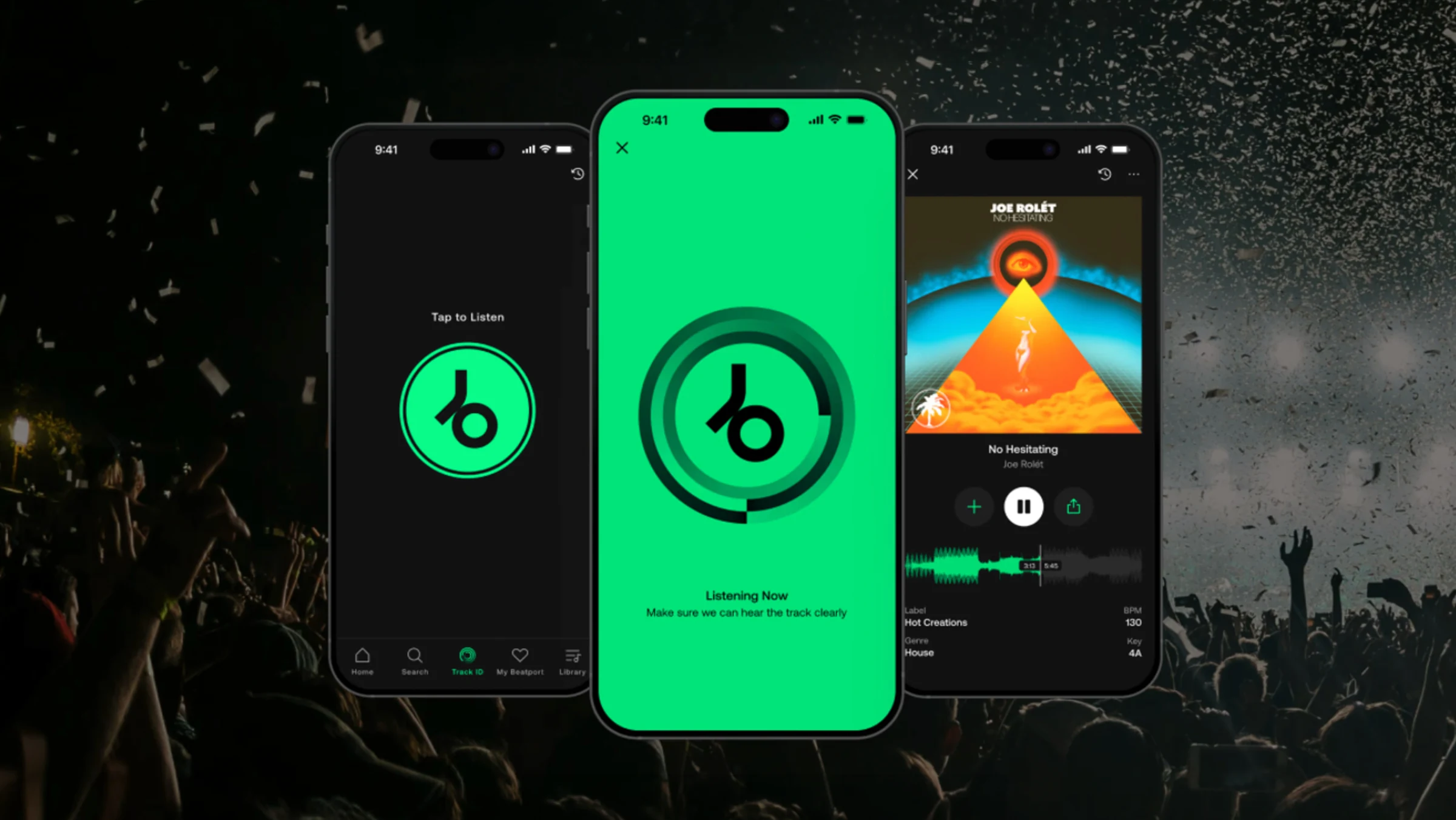
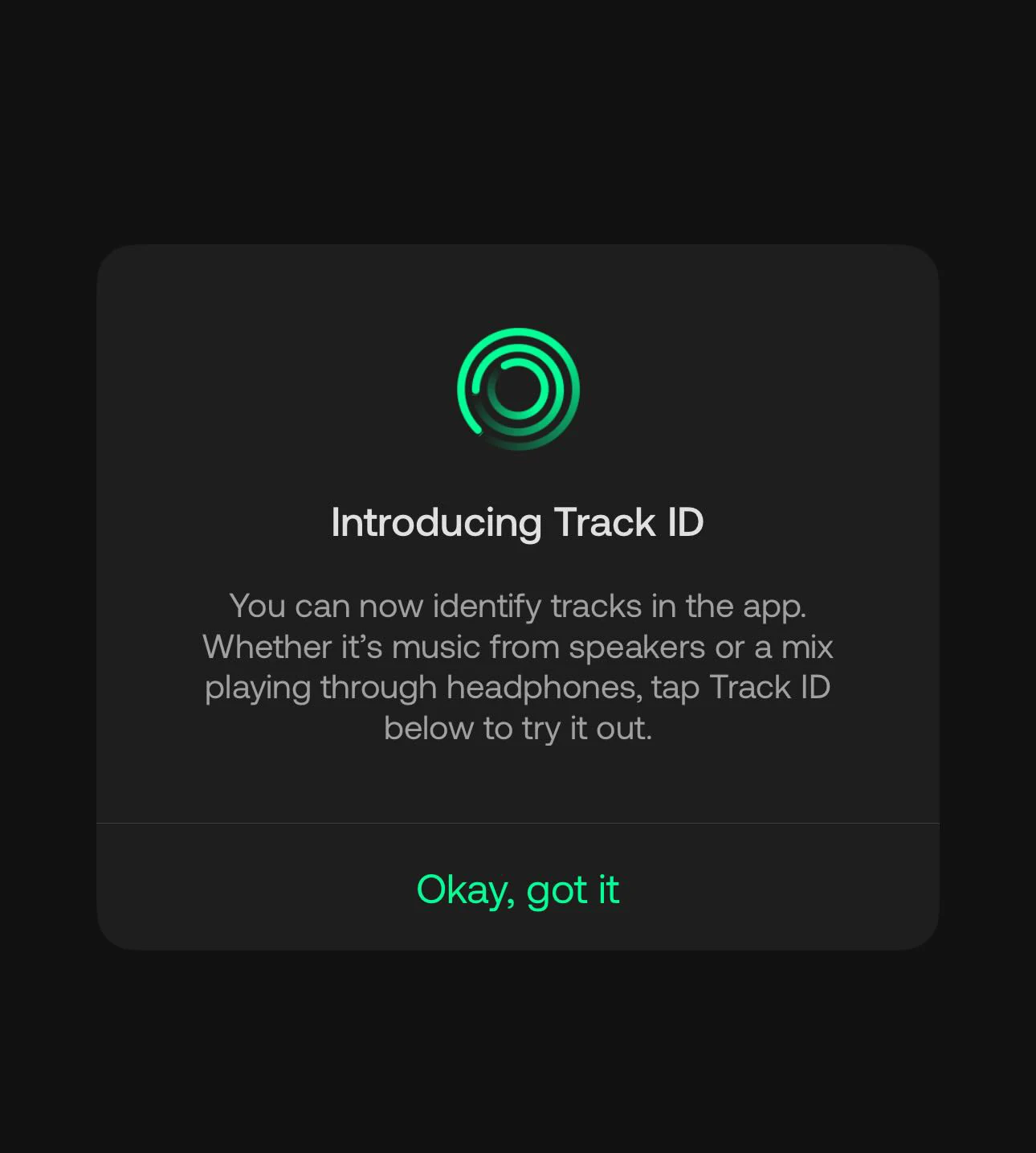
Beatport ID new feature displayed on Beatport website. Credits : Beatport
Beatport has introduced Track ID, a new music recognition feature integrated into its mobile application, allowing users to identify tracks being played in clubs, festivals or DJ mixes in real time. Developed in partnership with seeqnc, the tool is positioned as a DJ-focused alternative to mainstream identification apps such as Shazam, designed specifically to function in difficult club environments where tracks are blended, pitch-shifted or layered within transitions.
From a technical standpoint, the move makes sense. In fact, it arguably arrives years later than it should have.
As the dominant download platform for electronic music over the past two decades, Beatport has always occupied a unique position within club culture. Unlike streaming services aimed at passive listening, its entire business model was historically built around DJs actively searching for, purchasing and downloading tracks. The idea of directly connecting listeners to tracks being played on dancefloors — and redirecting them toward purchase pages — feels less like innovation than an overdue extension of Beatport’s original function.
The company frames Track ID as a discovery tool designed to help electronic music fans identify tracks instantly and give greater visibility to producers. Yet the launch also exposes a broader shift within club culture itself.
" height="36.18314535452494px" id="H01QrPmHK" width="50.03582884990591px"/></g></svg>)
When DJs can easily identify and share track information, it benefits everyone.
- Helen Sartory
Beatport Chief Revenue Officer
For decades, one of the DJ’s primary functions was precisely this process of curation and transmission. Dancefloors were spaces of discovery where audiences encountered unfamiliar records, trusted selectors, and gradually developed musical literacy through repetition, context and experience. Club culture functioned as an educational ecosystem. DJs introduced audiences to music they did not know yet.
Track ID reflects a very different relationship to music consumption: one increasingly centred around instant recognition, immediate access and algorithmic reassurance. The desire to identify every track in real time also reveals something uncomfortable about the current state of electronic music culture itself — many listeners no longer possess the musical references, labels or contextual knowledge that once formed the foundation of dance music communities.
In that sense, tools like Track ID solve a symptom rather than the underlying issue.
They facilitate access to already released music, but they do little to preserve the culture of curiosity that historically defined club spaces. More importantly, the technology fundamentally breaks down once DJs move outside the ecosystem of commercially available tracks. Unreleased productions, edits, remixes, forthcoming releases and exclusive versions — long central to underground DJ culture — remain unidentifiable by definition.
Ironically, those unreleased tracks are often the records audiences most desperately want to identify.
The launch also arrives shortly after Apple Music expanded its own DJ mix ecosystem and attribution systems, highlighting a broader industry trend: platforms increasingly positioning themselves as defenders of artist visibility and rights management.
That narrative deserves closer examination.
" height="36.18314535452494px" id="eWlmNiy7v" width="50.03582884990591px"/></g></svg>)
What we hope to see is Track ID being used not only as a discovery tool, but in the future, building the foundations for accurate setlist reporting (helping payout missing performance royalties), and at a global level, showing labels and artists where and when their music is being performed live.
- Helen Sartory
Beatport Chief Revenue Officer
Beatport claims Track ID could eventually contribute to more accurate setlist reporting and help artists receive missing performance royalties when their music is played live. In practice, however, that is not how royalty collection systems currently operate.
In most territories, clubs, festivals and promoters are already supposed to declare playlists and performances to their national collective management organisations (CMOs or OGCs depending on the country). These organisations are responsible for distributing neighbouring rights and public performance royalties to rights holders.
The structural problem is not the absence of identification technology. The problem is that many collection societies around the world still operate with opaque reporting systems, fragmented databases and massive quantities of unallocated royalties sitting in so-called “black boxes” for years before eventually being redistributed according to internal market-share formulas — often benefiting major domestic repertoires rather than the actual artists played.
If Beatport and seeqnc genuinely intended to solve the royalty attribution problem, the logical move would not have been a consumer-facing app for clubbers. It would have been deploying this recognition infrastructure directly to rights organisations, venues and promoters globally.
That is where the missing money actually sits.
" height="36.18314535452494px" id="RvcEJZzRz" width="50.03582884990591px"/></g></svg>)
At seeqnc, we build technology that unlocks revenue opportunities for artists and rights holders. We’re proud to support Beatport in launching Track ID and advancing music discovery for the global DJ community.
- Berhard Famler
Seeqnc CEO and Co-Founder
Instead, Track ID primarily serves Beatport’s own ecosystem: keeping users inside the platform, accelerating track discovery and potentially increasing downloads or streams. There is nothing inherently wrong with that. But presenting the feature primarily as an artist-compensation tool risks confusing visibility with structural reform.
Ultimately, Track ID says less about technological innovation than about the current transformation of dance music culture itself. Clubbing increasingly operates within a broader digital economy shaped by immediacy, accessibility and frictionless consumption. The dancefloor is no longer simply a place to lose yourself in the unknown. Increasingly, it becomes a searchable database in real time.
Whether that represents progress or erosion depends largely on what one believes club culture was supposed to preserve in the first place.
TAGS :
Beatport, Beatport ID, Seeqnc,